General interest and trips

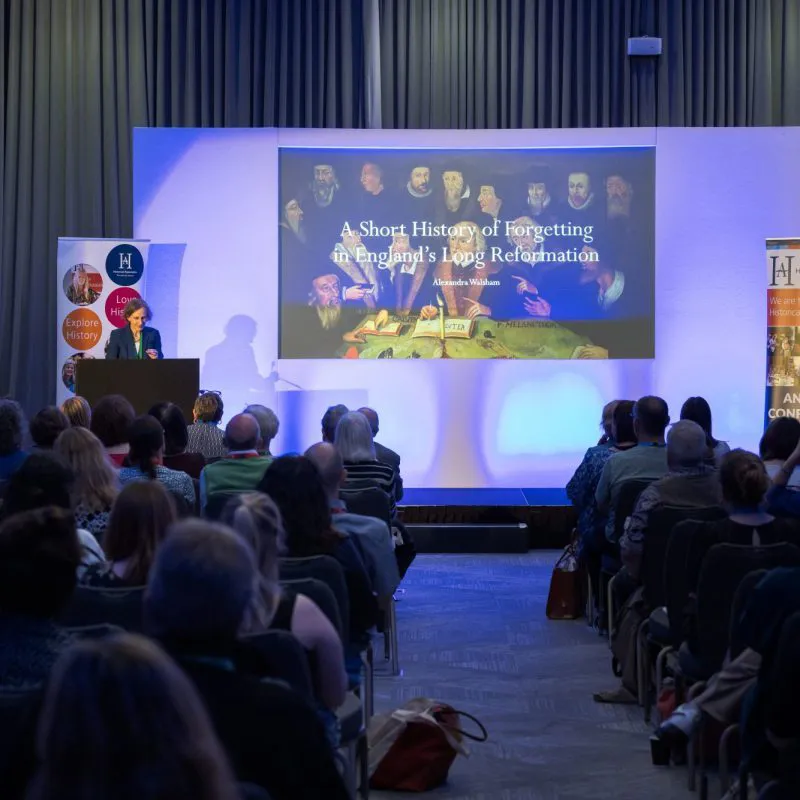
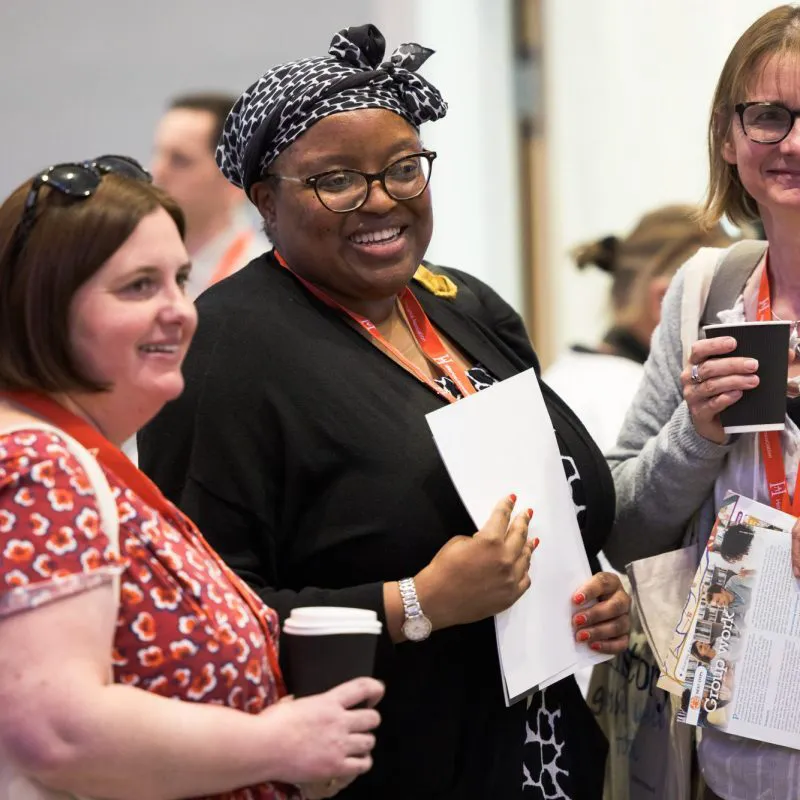
The HA Conference is a unique opportunity to join the history community on a weekend of engaging history. In the General pathway you can enjoy lectures from academic researchers on every aspect and period of history, improving your knowledge and exploring new sources and areas of historical interest, not to mention our popular local history walks and visits. 

Walks and visits

Visit to Lindisfarne, featuring a guest academic lecture

Lindisfarne is a small island with a lot of history, which – despite being connected to the mainland by road twice a day – is surprisingly difficult to get to. Oh, and it feels like the end of the earth. This is why the HA is offering to take you there, so we do the hard work and you just take in the historical journey. Leaving by coach on the Thursday afternoon, before Conference has begun, the trip will take you along the Northumberland coast to Lindisfarne for an early-evening chance to look around the island and enter some of the landmarks (subject to negotiated opening times). We will even bring you back in time for a late supper. The tour will be supported by an additional online talk by leading academic Professor Richard Gameson, an expert on the Lindisfarne Gospels.

You can book to attend when registering for your conference ticket this is priced at £45 including VAT. Please note that the fee does not include entry costs to either English Heritage or National Trust properties on Holy Island.

Thursday 14 May: depart c. 14:30, return to Hilton no later than 21:30

Early bird walking tour of Newcastle

If you miss out on Lindisfarne and know that you will be busy in sessions over the Friday and Saturday, then why not join us for a walk on the Thursday evening? Taking in a few of the sights and sounds of the city of Newcastle, catch your bearings and learn some of the basic history of this rich and impressive city. 

There is no charge for this tour but you can book to attend when signing up for your conference ticket.

Thursday 14 May: 14:00–15:00 

Visit to the Quayside and Baltic Centre for Contemporary Art

Fancy a stroll along the Tyne? The Romans liked to, as did the Saxons, some Vikings and anyone else who happened to settle in the cities of Newcastle-upon-Tyne and Gateshead – well, when it wasn’t so heavily polluted and busy with industry that you couldn’t get to it. Join us for a walk through the history of the river and its environs, visit the viewing platform of the Baltic Centre for Contemporary Art, housed in a converted flour mill, and look out at the modern city with its markers of the past across the skyline. Led by the HA’s in-house history guide and a local guide from the Baltic Centre, just hope that the fog has passed so that you can admire the views. 

Friday, Session 1 & 2: 10:45–13:00 (specific timings to be confirmed closer to the event) 

Walking tour: Trade and empire

For centuries, the city of Newcastle-upon-Tyne was one of the UK’s leading ports, with a reputation for industrial output, especially coal and shipbuilding. However, like all ports, if things and people go out, then others come in. Men and women from across Europe and the globe arrived at Newcastle docks daily, some for a short period and others staying permanently. Raw materials for factories, food stuff and luxury items, along with ideas and languages, have left signs of their presence, both physically and culturally, in the city and its surrounding areas. In this short walk around the city centre, the impact of the city’s trade and its relationship to global society and imperialism will be described and addressed by the respected historian Dr Edward Anderson. 

Saturday, Session 1 & 2: 11:00–13:15 (specific timings to be confirmed closer to the event) 

Talks and workshops

The Haitian Revolution and the origins of modern human rights

Christina Mobley
Newcastle University 

This lecture explores a foundational event in the history of the modern world: the Haitian Revolution. Historians have rightly lauded the Haitian Revolution as the most radical of the Age of Revolutions. By granting freedom and citizenship to all Haitians, regardless of skin colour, it represents a crucial moment in the history of the destruction of slavery and the construction of democracy. Moreover, these accomplishments were brought about by the enslaved, a majority of whom had been born in Africa. However, in the wake of the Revolution, slave-owning Western governments and writers embargoed and demonised the newly independent nation, leading to the pivotal event being largely forgotten in the Western world. The Haitian Revolution provides an opportunity to re-evaluate the diverse origins of republican democracy and human rights.

Friday, Session 1: 10:45–11:45 

Margaret Thatcher’s world

Martin Farr
Newcastle University 

Thatcherism is generally held to have constituted a set of diagnoses of – and resultant prescriptions for – Britain’s ills. But it also had a strongly international dimension. In being an ‘-ism’, it was portable and easily understood, and in its personification, where Thatcher was usually the only woman in the room in international meetings in the 1980s, a political profile was established that Margaret Thatcher was only too happy to endorse. Thatcherism as an international phenomenon was a much more coherent and recognisable brand than Reaganomics; it embodied a set of policies – deregulation, privatisation and strengthening of the security state – alongside and indivisible from a manner of implementation, in particular the style of leadership that Thatcher herself embodied. This is why, both at the time and subsequently, the person and the -ism had an outsized international profile. Their presence in the public discourse of foreign polities – hotly disputed, as was the case at home – was striking. And still it endures. 

Friday, Session 2: 12:00–13:00 

The Chinese Cultural Revolution in history and memory

Joseph Lawson
Newcastle University 

The Cultural Revolution was a deeply traumatic episode in Chinese history, with far-reaching consequences for the country’s social and political order. These have been addressed in a highly circumscribed way in a process of official reckoning with the past. Narratives of the Cultural Revolution that emerged from official reckonings appear to deal with the era’s violence but distort it in important ways, universalising some experiences and hiding others. This talk will address these issues through a focus on schoolteachers. 

Friday, Session 3: 14:00–15:00 

Parliamentary and royal ceremony in the Polish-Lithuanian Commonwealth in the seventeenth century

Katarzyna Kosior
Northumbria University 

The Polish-Lithuanian Commonwealth was an elective monarchy in which the king co-ruled with a bicameral parliament, also known as the Sejm. The king was bound by the Henrician Articles, which outlined his prerogatives and the ways in which they were limited by the Sejm. At the same time, the king was an integral part of the senate – the upper parliamentary chamber – and bestowed all offices of state, the sole source of rank and prestige in Poland-Lithuania. This talk traces how the relationship between royal and parliamentary power manifested in the blurred boundary between royal and parliamentary ceremony, taking the coronation accompanied by a coronation Sejm as its case study. From the event organisation, through the people who took part, to matters of parliamentary debate causing incidents in the Church, the talk demonstrates that regarding ‘royal’ and ‘parliamentary’ as entwined allows us to better understand the functioning of the parliamentary monarchy in Poland-Lithuania. 

Friday, Session 3: 14:00–15:00 

Daily life in late-Stalinist Leningrad: living in the shadow of war and the siege

Robert Dale
Newcastle University 

This session offers a case study of how Soviet society dealt with the aftermath of total war and extreme violence after 1945. It focuses on a city with a uniquely traumatic wartime experience. Between 8 September 1941 and 27 January 1944, Leningrad endured a brutal and murderous siege, which resulted in the death of over a million civilians and perhaps another million soldiers. Leningrad’s population in 1945 was barely a third of its pre-war level. How was ‘normal’ everyday life rebuilt amid the backdrop of mass death? The talk focuses on the experiences of returning populations (demobilised soldiers, former POWs, re-evacuees and repatriates) and how Leningraders rebuilt their lives in the wake of war. It explores the challenges of daily life (particularly issues of work, housing, food and crime) and the difficulties of interacting with the late-Stalinist party state. It also contextualises this everyday history from below within the wider framework of Stalinist political events and processes. 

Friday, Session 4: 15:15–16:15

Staging the legend: Napoleon in theatre and cinema, c.1800–2000

Laura O’Brien
Northumbria University 

Laura O’Brien is a researcher on the cultural, social and political history of modern Europe, with a particular interest in visual culture in nineteenth- and twentieth-century France. Her current research is focused on two main projects. The first examines visual representations of Napoleon in popular culture, with a focus on Napoleonic performance in French theatre and film from the 1790s to the present. Her other current work looks at the construction of memories of revolution in France between 1848 and 1948.

Friday, Session 4: 15:15–16:15 

Merchants, scholars and antiquaries: England and the Ottoman Empire in the seventeenth century

Simon Mills
Newcastle University 

The English Levant Company controlled English trade with the Ottoman Empire from the end of the sixteenth century. Less significant historically than its better-known rival, the East India Company, it nonetheless had a huge if indirect impact on spheres of early modern intellectual and cultural life. This talk will explore the careers of some of the merchants, diplomats, chaplains and physicians who travelled to cities such as Istanbul and Aleppo under the Levant Company’s auspices. It will show how the opening up of new commercial and diplomatic opportunities during the seventeenth and eighteenth centuries contributed to the birth of European Arabic studies, the rediscovery of ancient sites such as Palmyra – long marooned in the Syrian desert – and early natural histories of the Eastern Mediterranean.   

Friday, Session 5: 16:30–17:30 

Executive (in)action: Kennedy, Johnson and the civil rights movement of the 1960s

Brian Ward
Northumbria University 

This talk considers the responses of two US presidents – John F. Kennedy and Lyndon Baines Johnson – to the African American freedom struggle of the 1960s. Over the years, the civil rights records of both presidents have come under intense scrutiny from fellow politicians, activists, journalists, filmmakers and professional historians, with their reputations on racial matters rising and falling accordingly. This presentation explores their approach towards civil rights in the context of a dynamic, Black-led social protest movement, omnipresent Cold War concerns at home and abroad, and a range of personal political calculations. It also thinks about what is at stake in how the contributions to civil rights of these two presidents are remembered in popular memory, often in ways that are at odds with the historic record. 

Friday, Session 5: 16:30–17:30 

Saturday Sessions

Between the campus and the street: new perspectives on student activism and its histories

Daniel Laqua
Northumbria University 

From youthful revolt in 1968 to the spread of campus-based protest encampments in 2024, students have attracted widespread attention for their activism. This talk will offer an introduction to the latest research on the efforts and campaigns of university youth. In doing so, it relates students to key moments and transformations in modern and contemporary history – for instance, covering their role in anticolonial movements and Cold War politics, as well as their responses to cultural, social and environmental change. Join Professor Daniel Laqua – a specialist in the histories of activism and the editor of the HA’s journal History – for a talk that highlights the different features of collective action that has happened in and beyond educational settings. 

Saturday, Session 1: 11:00–12:00

The Bolsheviks in power: consolidating the early Soviet government, 1918–24

Lara Douds
Northumbria University 

Lara Douds is a specialist in the history of government, political practice and political culture in Russia and the Soviet Union. Her research explores continuity across the revolutionary divide of 1917, specifically the Soviet government’s inheritance – in structures, culture and practice – from the Tsarist past and how this legacy interacted with revolutionary ideology and circumstance.

Saturday, Session 212:15–13:15 

‘Institutionalised fascism’: race and the politics of English prisons, 1971–1985

Liam Liburd
Durham University 

In late 1976, Brian Baldwin, a prison officer at Strangeways Prison in Manchester, was exposed as a practising fascist. The anti-fascist monitoring magazine Searchlight revealed Baldwin’s connections to several white supremacist organisations, including the National Front, the League of St George, and the neo-Nazi paramilitary group Column 88. After investigations by the Guardian and Observer newspapers, it quickly became clear that this was bigger than the problems of one prison. However, the Home Office refused to take action against the officers involved. Baldwin and other officers faced no professional consequences and kept their jobs. This talk explores this rumoured infiltration of the UK Prison Service and the muted response of the state during the 1970s and early 1980s. In doing so, it reveals an untold history of institutional racism in English prisons. 

Saturday, Session 3: 14:15–15:15 

Politics, divine defence and the pilgrim path to Kōyasan in medieval Japan

Philip Garrett
Newcastle University 

There is a path through the mountains of the Kii peninsula in central Japan that leads up to the Shingon Buddhist complex Kōyasan, a town of temples about 850m above sea level, nestled within a ring of higher peaks. Between the temple’s foundation at the beginning of the ninth century and the construction of roads in the late nineteenth century and a funicular in the twentieth, this was the primary route to the temple for everyone, from villagers bringing food up from lower altitudes, to pilgrims, prime ministers and retired emperors. The path was rebuilt with new stone milestone markers between 1265 and 1285, and the project to erect these tells us much about the politics and government of the thirteenth century. The path was, at the same time, part of an economic system, a communication network, a philosophical expression and a delineation of sacred space. This talk will explore how temples, warrior administration and the national defence against the Mongol invasions of Japan were all intertwined.

Saturday, Session 3: 14:15–15:15 

Bad reputation: Fear as a weapon of warfare in the Mongol Empire, and its distorting historical legacy

Nicola Clarke
Newcastle University 

The thirteenth-century Mongol conquests are widely remembered as catastrophic, for both human life and the environment. Medieval chroniclers across Eurasia wrote about them in apocalyptic terms, producing a lasting historical image of the invaders as wantonly destructive mass murderers. While there can be no doubt that contemporaries experienced these events as a deeply traumatic crisis, this experience was in part a function of the Mongol armies’ strategic cultivation of a terrifying reputation in order to reduce the number of battles that they had to fight. This talk will discuss recent archaeological research that has cast doubt on the enormous death tolls reported in medieval sources, and work by a generation of scholars in multiple fields that has uncovered a much more complex and interesting picture of the goals and interests of the Mongol empire-builders. 

Saturday, Session 4: 15:45–16:45